Poly D : A great sounding instrument but with a few build quality issues
A great sounding instrument with a few quality issues.
Pros:
- The classic MiniMoog sound is all there.
- Solid metal and wood case.
- Nice sounding Juno chorus addition.
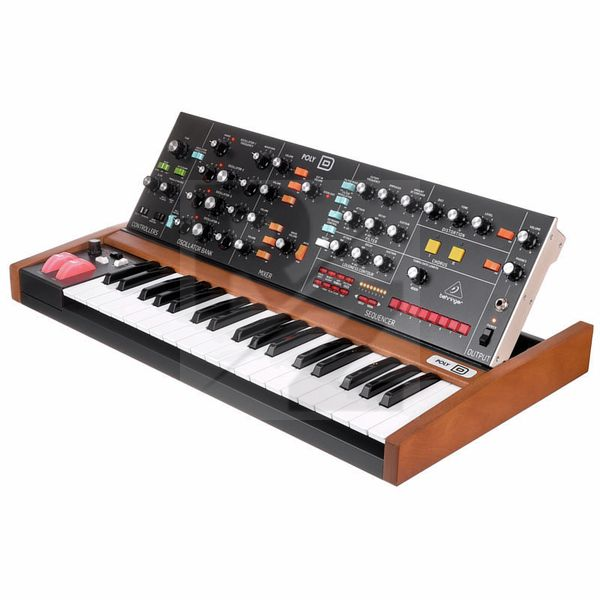
- Feels like an actual instrument. The whole structure and the tilting panel make it very accessible to the user.
- Paraphony.
- No patch memory (yes I consider that a feature).
Cons:
- The Oscillator waveform and octave switch caps rotate for quite a few millimeters before the switch actually starts moving beneath that. Feels quite off and unreliable.
- The black keys require a noticeable amount of extra pressure to act the same way the white keys are. Too noticeable when using velocity.
- Velocity response seems to always affect the cutoff frequency in a way that sounds like an extra envelope making playing notes with filter resonance impossible. I managed to deactivate through the app but was still there when played from a daw and had to bring velocity response to 0.
- The power button on the front panel is a really bad move and can easily switch the instrument off accidentally.
- Absence of a 440Hz tone switch for tunning. Thankfully I have my model d to tune poly d too however it'd be so much better to replace the power switch with the A440 and place the power switch somewhere in the back panel.
- The overdrive circuit feels rather useless as it doesn't suit the rest of the instrument sound.
- All in all, it feels like Behringer has little idea about how to design a functional front panel layout from an actual musician's perspective.
Overall I would recommend this to any musician looking for a classic analog instrument feel. I'm quite troubled by the build quality though. It makes it feel quite unreliable. I'm quite uncertain about whether I should return my copy or just relax and enjoy using it.
Technical Data
- Manufactured by Behringer
- Released in 2019
- Average price : $804
You may also like

2023 100%

2023 93%

2023 60%


2023

2023


2023

2023