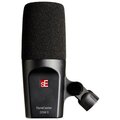
AKG Lyra
The AKG Lyra Ultra HD USB Microphone is a high-quality audio solution tailored to the needs of podcasters and content creators. With 4 selectable capture modes, a built-in headphone output for latency-free monitoring, and high-resolution audio capabilities, it offers top-notch performance.

Latest User Reviews
Value for money , far away from its competitors crisp , clear , and well balanced.
AKG and there is nothing to add above
This is exactly what I looked for! Second to none in this price point.
Superb!
Phenomenal piece, very versatile both for podcasts and your own recordings. Perfect for Zoom too!
I use it mainly for homerecording and for quick demos made on ipad.
I like the sound, its big pro that it records in stereo.
It's very solid and well built.
Only minus is localisation of USB socket because when the mic is in vertical position the cable is bent severely.
Great for voice & guitar not so great for saxophone
I use this for home recording - with a view to trying to improve my playing - mostly sax but also a bit of guitar and mandolin. It makes voice and guitar sound very good but it is very, very difficult to set it up to capture a loud instrument well.
Two big issues - the lack of a dial or read out on the gain is just plain careless and would be easy and cheap to sort out. I suspect it owes more to the visual product design aesthetic than any acoustic idea. This is not a cheap USB microphone and it seems a bit cheapskate to skimp like this on something small but so important. To be clear there will be many situations where a change of gain settings is necessary and where it would be far more convenient to look at the mic than check input levels on the computer - not least because the knob is on the back of the mic and easily moved by accident.
The second problem is something I can hear clearly but have not got the technical vocabulary to express clearly - to my ear it seems to make the sound, particularly of tenor sax, somehow bland and not assertive enough. I guess that that might be desirable for speech and many styles of singing but it takes a lot of the fun out of the sax. It also makes it hard to get a feeling for developing good tone.I think that this is because it is difficult to set the gain at a point that allows for loudness through all the overtones without clipping. This seems strange to me, given that the Lyra is supposed to have an SPL of 129dB - which is a lot louder than an unamplified sax will normally get near.
So while it's probably great for podcasts and singer songwriters it's a questionable buy for loud instruments
Technical Data
- Manufactured by AKG
- Released in 2019
- Average price : $144
- 4 Selectable characteristics
- Specially tailored to the needs of podcasters and content creators
- Plug n 'play on PC and Mac using class drivers
- Plug n 'play on iOS devices such as iPhone and iPad with Apple Camera Kit and external power supply (not included)
- Plug n 'play on Android devices from Android V9.x or higher in connection with OTG adapter (not included in delivery)
- Built-in headphone output for latency-free monitoring
- Polar pattern: 4 switchable capture modes - front, front & back, tight stereo, wide stereo
- Resolution: 24 bit / 192 kHz
- Frequency response: 20 - 20.000 Hz
- Max. sound pressure level: 129 dB SPL (0.5% THD)
- Headphone output with 16 ohms nominal impedance, output power (RMS) of 43 mW and a frequency response of 20 - 22.000 Hz
- Signal to noise ratio: 98 dB
- THD: <0.9%
- USB 2.0
- Incl. 2 m USB-C to USB-A cable and Ableton Live 11 Lite registration card
- Current consumption: 75 mA via USB
- Weight : 1kg
Reasons to buy
- Easy plug 'n' play setup for seamless use with a range of devices.
- High-quality sound reproduction suitable for voiceovers, podcasts, and home recording.
- Versatile capture modes and stereo recording make it suitable for various audio applications.
- Sturdy and well-built microphone with a stylish design that enhances any setup.
- Ideal for Zoom calls, podcasting, and professional content creation at a competitive price point.
Reasons to avoid
- May capture background noise in less quiet environments due to sensitivity.
- Lack of gain control dial or readout on the microphone, which can be inconvenient for some users.
- Challenges in capturing loud instruments effectively, particularly for saxophones.
You may also like

2023 100%


2023 100%

2023 90%
2023 80%

2023 73%